
Walk down any pet food aisle, and you’ll see endless varieties of crunchy biscuits and savory treats. While commercial snacks are convenient, many pet parents are looking for fresher, lower-calorie ways to reward their companions. Incorporating whole foods like fruits and vegetables into your pet’s routine is a fantastic way to offer variety, extra hydration, and vital vitamins.
However, a pet’s digestive system is vastly different from a human’s. What is a superfood for us can be a silent toxin for a dog or cat. Knowing exactly which natural foods are safe—and how to prepare them—is essential for keeping your furry friend healthy and thriving.
Safe and Nutritious Vegetables for Dogs and Cats
Vegetables are excellent low-calorie options, making them ideal for pets on a weight management plan or senior pets needing extra fiber.
1. Carrots (Raw or Steamed)
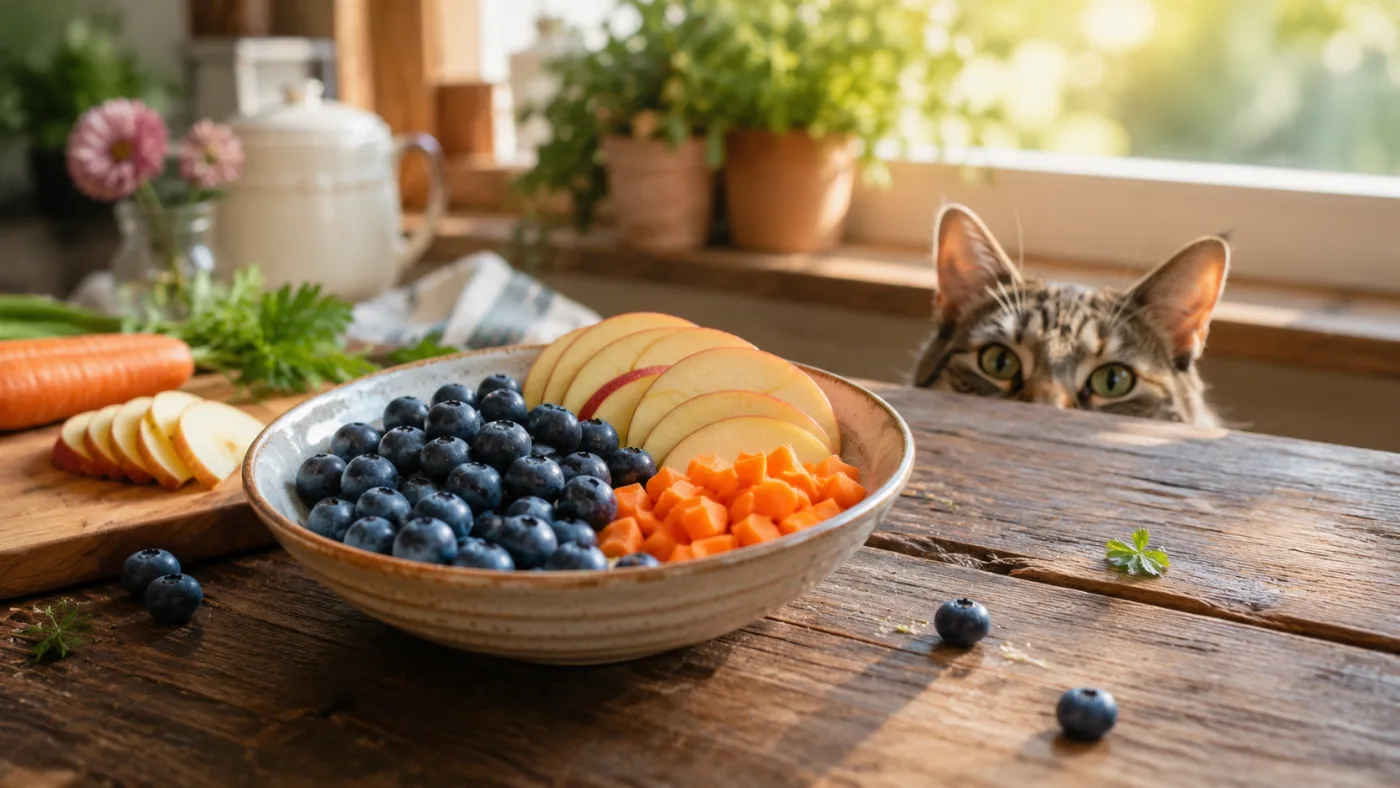
- The Benefits: Packed with beta-carotene (vitamin A), potassium, and fiber. Crunchy raw carrots are also fantastic for mechanical dental cleaning in dogs, helping scrape away soft plaque.
- How to Serve: Cut into bite-sized coins or sticks to prevent choking, especially for small dogs.
2. Pumpkin (Plain & Cooked)
- The Benefits: Pureed, plain pumpkin is a natural digestive miracle worker. High in soluble fiber, it helps soothe both mild diarrhea and constipation in both dogs and cats.
- How to Serve: Use pureed canned pumpkin with zero added sugar or spices (never use pumpkin pie mix). Add a single tablespoon to their normal food.
3. Cucumbers
- The Benefits: Composed of roughly 96% water, cucumbers are the ultimate summer treat. They contain virtually no carbohydrates or fats, making them the perfect reward for pets watching their weight.
- How to Serve: Slice into thin rounds or small cubes.
4. Green Beans
- The Benefits: Rich in iron, calcium, and vitamin K. Many veterinarians recommend replacing a small portion of a overweight dog's kibble with plain green beans to help them feel full while cutting calories.
- How to Serve: Steamed, boiled, or raw without any oil, salt, or garlic seasoning.
Delicious Fruits That Are Pet-Safe
Fruits contain natural sugars, so they should be served as an occasional treat rather than a daily staple.
1. Blueberries
- The Benefits: A true superfood loaded with antioxidants, vitamin C, and fiber. Antioxidants help protect brain function in senior dogs and support a strong immune system.
- How to Serve: Fresh or frozen. Frozen blueberries make a fun, crunchy summer treat!
2. Apples (Without Seeds or Core)
- The Benefits: Provides vitamins A and C, along with soluble fiber. The crunchy texture helps refresh breath and clean teeth.
- How to Serve: Slice thinly. Crucial: Always discard the core and seeds entirely—apple seeds contain trace amounts of cyanide, which is toxic to animals.
3. Watermelon
- The Benefits: Extremely hydrating and rich in vitamins A, B6, and C. It's a favorite refreshing snack during hot summer months.
- How to Serve: Remove the rind completely (it can cause intestinal blockages) and pick out all seeds.
⚠ Dangerous Foods: What You Must NEVER Feed Your Pet
While expanding your pet's diet is fun, some common kitchen ingredients are severe toxins that require emergency medical care if ingested:
- Grapes and Raisins: Highly toxic to both dogs and cats; even a single grape can trigger sudden, fatal kidney failure.
- Onions, Garlic, and Chives: Contain compounds that destroy red blood cells, leading to severe anemia.
- Avocados: Contain persin, a toxin that causes vomiting and diarrhea in pets. Additionally, the large pit poses a severe choking and intestinal obstruction hazard.
- Cherries & Peaches (Pits): Pit-bearing fruits contain cyanide in their pits, stems, and leaves, and the seeds can easily cause intestinal blockages.
- Chocolate, Coffee, and Xylitol: Highly toxic compounds that affect the nervous system, heart rate, and liver function.
Guidelines for Serving Whole Foods Safely
To keep treat time fun and hazard-free, keep these four rules in mind:
- The 10% Rule: Treats—even healthy fruits and veggies—should never make up more than 10% of your pet's total daily caloric intake. The remaining 90% must come from balanced commercial pet food.
- Introduce Gradually: Introduce one new food at a time in tiny quantities to ensure your pet’s stomach tolerates it without digestive upset.
- No Seasonings: Never add salt, butter, oil, sugar, or spices. Serve all produce completely plain.
- Mind the Size: Always chop raw produce into small, manageable pieces to prevent choking, particularly for smaller dog breeds and cats.
Frequently Asked Questions (FAQ)
Do cats actually enjoy eating fruits and vegetables?
Cats are obligate carnivores, meaning their bodies require meat to survive, and they lack sweet taste receptors. However, many cats enjoy small amounts of plain pumpkin for digestion, or cooked green beans and steamed broccoli for the texture.
What should I do if my pet accidentally eats a toxic food like a grape?
Contact your veterinarian or an emergency animal clinic immediately. Do not wait for symptoms to appear, as early medical intervention (such as inducing vomiting) is crucial for preventing kidney or liver damage.
A Fresh Approach to Rewards
Feeding your pet fresh fruits and vegetables is a wonderful way to bond, provide mental stimulation through new textures, and boost their health naturally. By staying informed about safe options and avoiding toxic foods, you can confidently share wholesome snacks from your kitchen with your beloved companion!
The information provided on this blog is for educational and informational purposes only and does not constitute veterinary medical advice. Always consult a qualified veterinarian for any questions regarding your pet's health or behavior.