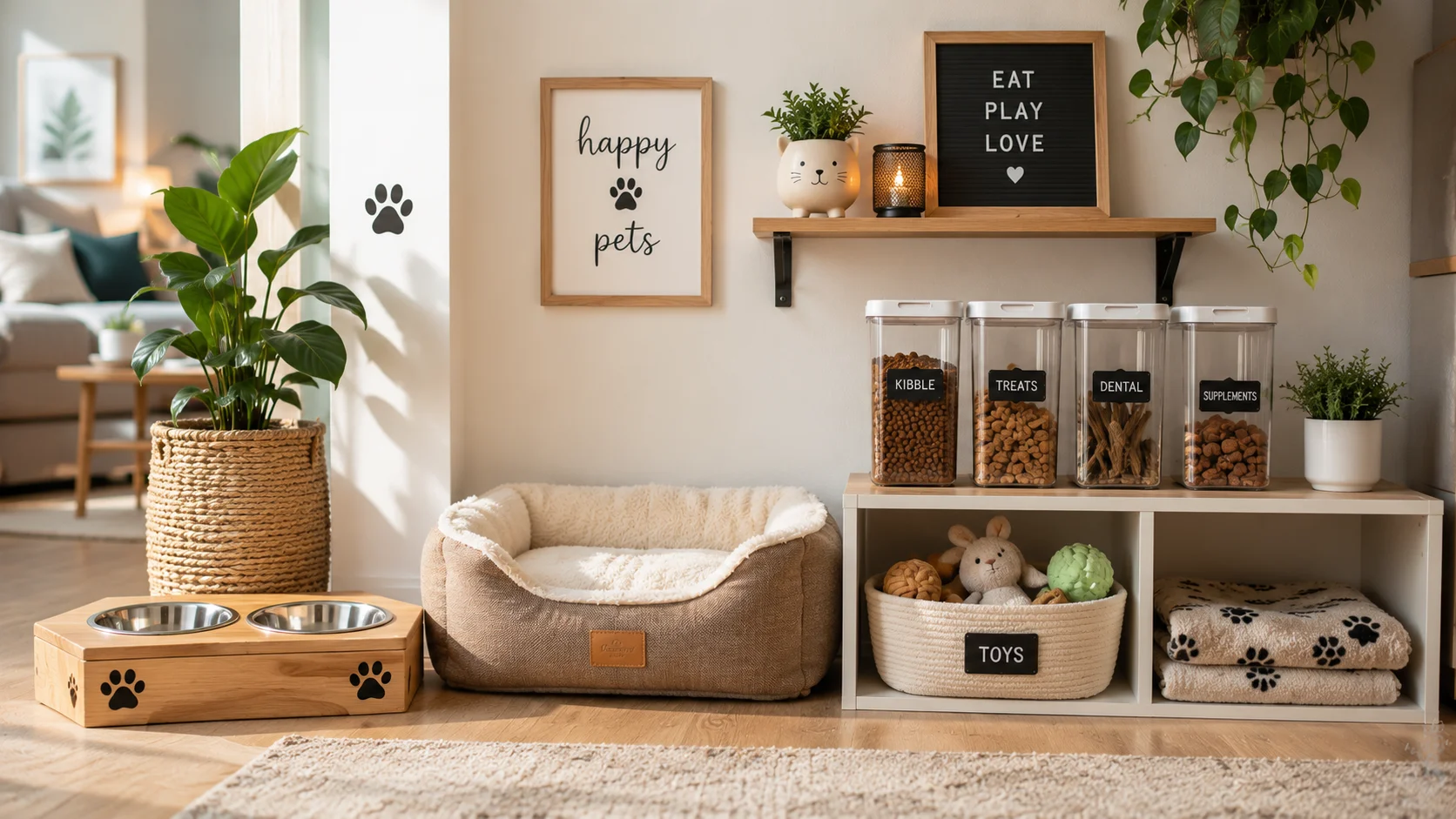
Living with pets brings endless joy, warmth, and laughter into a home. However, it also comes with a unique set of organizational challenges. From scattered chew toys and overflowing bags of kibble to tangled leashes and grooming supplies taking over bathroom counters, pet clutter can quickly make a living space feel chaotic.
Creating an organized home for you and your pets isn't just about aesthetics—it directly impacts your pet’s health, safety, and daily well-being. By designating clear pet zones, streamlining supply storage, and establishing manageable daily routines, you can maintain a sparkling, harmonious household without sacrificing your pet's comfort.
Establishing Dedicated Pet Zones
Pets thrive on predictability and clear spatial boundaries. Establishing specific areas for eating, sleeping, and playing helps keep clutter contained while making your pet feel secure.
1. The Feeding Station
- Choose a Low-Traffic Area: Place food and water bowls in an out-of-the-way spot, such as a corner of the kitchen or laundry room, where your pet can eat without constant foot traffic.
- Use Elevators and Mats: Place silicone, wipeable mats underneath bowls to catch spills and water splashes. Raised feeding stations with built-in storage drawers offer an elegant solution that keeps bowls stationary.
- Vertical Hydration Options: For cats, consider placing water fountains away from the food area, as felines naturally prefer drinking water away from their hunting or feeding spots.
2. The Rest and Comfort Zone
- Integrated Pet Furniture: Choose pet beds that complement your home decor. Orthopedic beds with washable, removable covers make maintenance effortless.
- Crate and Cave Styling: If you use crates for dogs or cozy caves for cats, incorporate them into existing furniture—such as end tables that double as stylish crate enclosures.
Smart Storage Solutions for Pet Supplies
The key to eliminating pet clutter is giving every item a single, designated home. When supplies are easy to access and put away, maintaining order becomes effortless.
1. Dry Food and Treat Organization
- Airtight Storage Containers: Transfer dry food out of bulky bags into food-grade, airtight plastic or stainless steel containers. This protects food from moisture, pests, and light, keeping kibble fresh and crunchy.
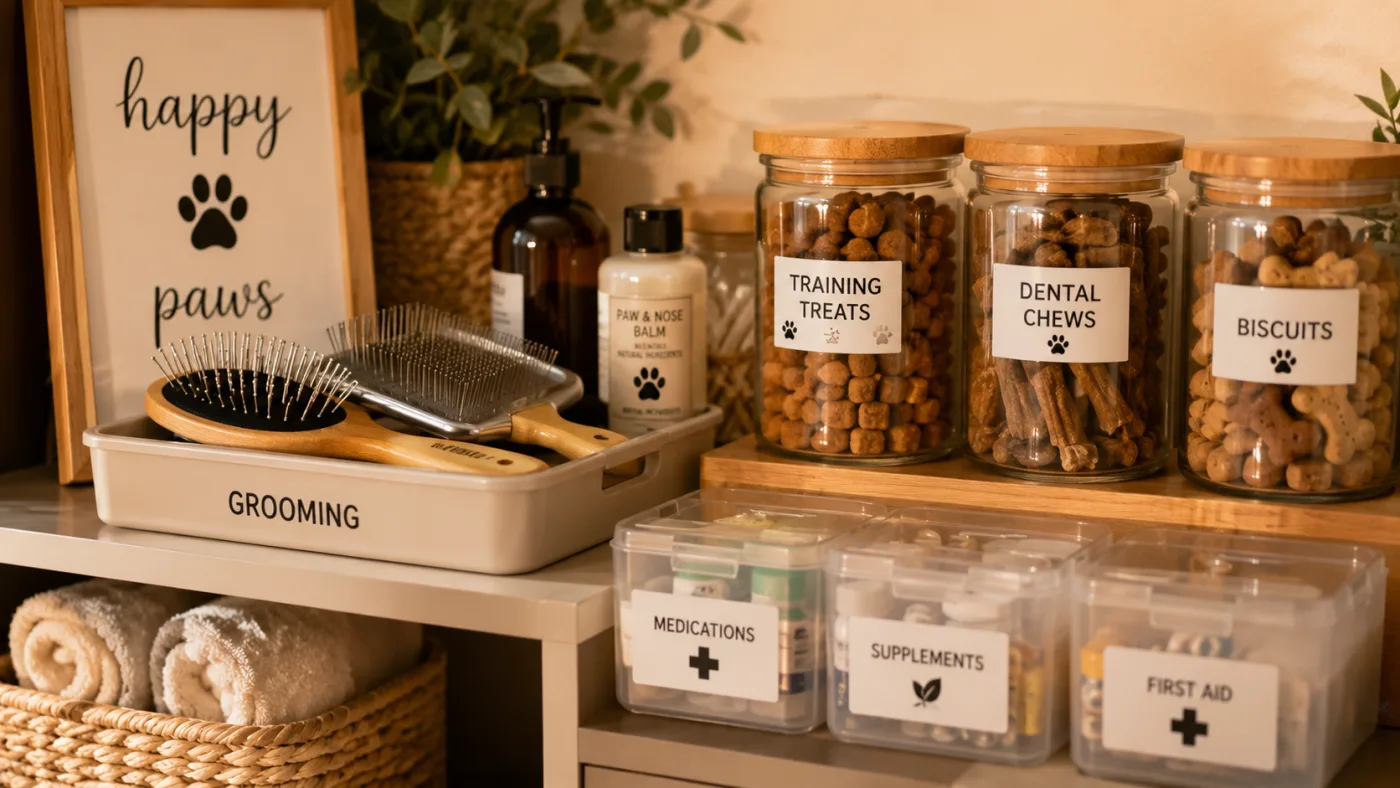
- Labeling and Expiration Tracking: Always clip or tape the bag's expiration date and lot number to the container. Keep treats in clear glass or plastic jars on a high shelf out of reach.
2. Toy Baskets and Enrichment Storage
- Accessible Toy Bins: Keep a low, open woven basket or soft canvas bin for daily toys so your dog can easily pick their favorite item.
- Toy Rotation System: Instead of keeping dozens of toys out simultaneously, store 70% of them in a closed cabinet. Rotate 3-4 toys weekly to keep your pet continuously engaged and excited by "new" options.
3. Walking Gear and Entryway Organization
- The Entryway Command Center: Install wall-mounted hooks or a dedicated basket near the front door for leashes, harnesses, poop bag dispensers, and weather booties.
- Paw Wiping Station: Keep a small basket with pet-safe wet wipes or a micro-fiber towel right by the entrance to wipe muddy paws immediately after walks.
Grooming and First Aid Organization
Medical supplies and grooming accessories often cause the most bathroom clutter. Organizing these items ensures you can act swiftly during routine care or minor emergencies.
1. The Grooming Caddy
- Portable Totes: Store slicker brushes, de-shedding tools, nail clippers, and ear cleaning solutions in a caddy with a handle. This allows you to bring all necessary tools to wherever your pet feels most relaxed.
- Shampoo and Bath Supplies: Keep pet shampoos and conditioner bottles in a dedicated bin beneath the sink to prevent accidental spills among human toiletries.
2. The Pet First Aid Kit
- Separate Emergency Container: Dedicate a clearly labeled, sealable box for your pet's medical needs.
- Essential Contents: Store bandages, antiseptic wipes, styptic powder, tick removal tools, saline solution, and a copy of your pet's vaccination records and microchip details.
Maintaining Cleanliness and Odor Control
An organized space is much easier to keep clean. Small, daily maintenance habits prevent pet hair, dander, and odors from taking over your home.
- Robotic Vacuums for Daily Maintenance: Scheduling a robotic vacuum to run daily keeps shed fur and tracked litter under control without effort.
- Air Purifiers: Place HEPA air purifiers near litter boxes or pet beds to continuously trap airborne dander, hair, and lingering odors.
- Washable Fabric Protection: Protect sofas and car seats with machine-washable throw blankets or fitted covers that can be laundered weekly.
⚠ Common Pet Organization Mistakes
- Leaving Food Bags Open: Storing dry kibble in open bags allows fats to oxidize, causing food to turn rancid quickly and attract insects.
- Overcrowding Toys: Dumping every toy your pet owns into a single pile leads to indifference and chaos. Less is more when it comes to active toy selection.
- Storing Medications Within Reach: Never store pet medications or flea treatments on low coffee tables or accessible counters; curious pets can easily chew through packaging.
Frequently Asked Questions (FAQ)
How do I stop my dog from scattering toys everywhere?
Teach your dog the "put it away" cue using positive reinforcement, or simply implement a toy rotation system. Leaving only 2-3 toys out at a time drastically reduces daily living room clutter.
What is the best way to store wet cat or dog food once opened?
Transfer unused canned food to a sealed glass container or put a reusable silicone can lid directly over the open can. Store it in the refrigerator and consume it within 48 to 72 hours.
How can I make my litter box area look organized and discreet?
Use litter box furniture enclosures that hide the tray inside a stylish cabinet. Combine this with a top-entry litter box or a double-layer honeycomb mat in front of the exit to trap loose granules before they spread.
A Harmonious, Clutter-Free Home
Organizing your home for pets isn't about hiding their presence; it's about integrating their needs seamlessly into your lifestyle. With clear systems and smart storage, you can enjoy a beautifully structured home alongside your beloved animals.
The information provided on this blog is for educational and informational purposes only and does not constitute veterinary medical advice. Always consult a qualified veterinarian for any questions regarding your pet's health or behavior.