By the time most dogs and cats turn three, they already have some degree of dental disease — around 80% of dogs and 70% of cats, according to veterinary estimates. Almost none of that shows up as an obvious problem you'd notice without checking. Here's what to actually look for, what the stages mean, and what genuinely helps at home versus what's mostly marketing.
What dental disease actually looks like, stage by stage
Vets group it into two broad phases. The first, gingivitis, is inflammation of the gums from plaque and bacteria — a thin red line along the gumline, maybe some mild swelling. This stage is fully reversible with a professional cleaning. The second phase, periodontitis, means the damage has reached the bone and ligament holding the tooth in place. At that point it can be managed, but not undone.
- Early gingivitis: A red line where gum meets tooth, some visible plaque or tartar, breath that's a little off. Reversible with a cleaning.
- Early periodontitis: Under 25% bone loss around the tooth root, visible only on a dental X-ray. Gums may look swollen and bleed easily. A professional cleaning is needed to stop it from progressing.
- Moderate periodontitis: 25–50% bone loss. Teeth may start to feel loose, gums recede, and pain becomes more likely even if your pet doesn't show it obviously.
- Advanced periodontitis: More than half the supporting bone is gone. Teeth become mobile or fall out on their own, and extraction is usually the only option left.
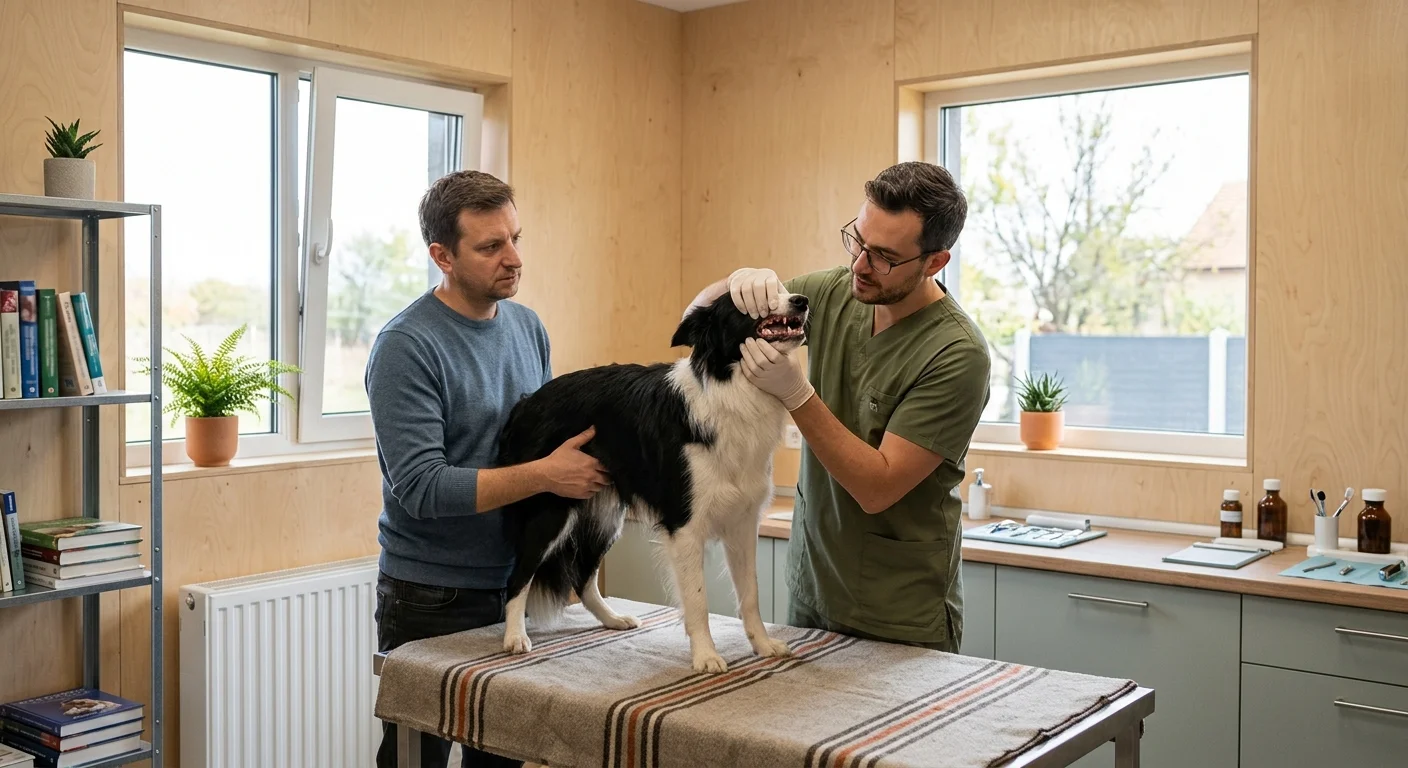
None of the middle stages are visible just by looking at closed teeth from the front. A vet has to actually lift the lip to look, and often needs an X-ray to know what's happening below the gumline.
The signs you can actually catch at home
Bad breath is the most obvious one, but it's easy to write off as "just how dogs smell." It's not — persistent bad breath is almost always plaque and bacteria, not something normal to ignore. Beyond that, watch for tartar (a hard, yellow-brown crust along the gumline), gums that look red or swollen rather than pale pink, and any bleeding when you touch the gums or when your pet chews something firm.
Behavioral signs are easy to miss because pets are good at hiding pain. Chewing on one side only, dropping food, pawing at the face, or a sudden preference for soft food over kibble can all point to a mouth that hurts, even without visible damage. Cats especially tend to just quietly eat less rather than show obvious discomfort.
The kibble myth, and what dry food actually does
A lot of owners assume dry kibble keeps teeth cleaner than wet food through some scrubbing action as your pet chews. That's mostly overstated. Most kibble shatters on the first bite rather than scraping the tooth surface the way people imagine, and the effect on plaque is much smaller than marketing suggests. Diet alone isn't a dental care plan, regardless of which type you feed.
What actually helps at home
Brushing is the one thing with real evidence behind it, and it works the same way it does for people. Daily is ideal, but even every other day makes a real difference. Use a pet-specific toothpaste, never a human one — some contain xylitol, which is toxic to dogs. Focus on the outer, cheek-side surfaces of the back teeth, since that's where plaque builds up fastest. Don't expect to manage a full mouth on day one if your pet's never had their teeth touched before; a slow introduction works better than forcing it.
If brushing genuinely isn't happening — and it's worth being honest that most owners don't manage it daily — dental chews and treats can help, but only the ones that actually do something. Look for a seal from the independent council that tests pet dental products and only approves the ones with real evidence behind them. A chew without that seal might do nothing beyond entertain your pet for ten minutes. Avoid anything hard enough that it wouldn't give at all if pressed against your own knee — that's roughly the point where a chew risks cracking a tooth instead of cleaning it.
Why the annual cleaning still matters, even with good home care
Even with daily brushing, plaque and tartar build up below the gumline where a toothbrush can't reach. A professional cleaning under anesthesia is the only way to actually clean there and take X-rays of what's happening at the roots. This is genuinely necessary, not an upsell — a full set of dental X-rays finds meaningfully more problems than a visual exam alone, including damage that's invisible until it's already serious.
Left untreated, dental disease isn't just a mouth problem. The bacteria involved can enter the bloodstream and have been linked to added strain on the heart, kidneys, and liver over time. That connection is part of why dental disease deserves the same seriousness as any other chronic condition, not just a cosmetic concern about bad breath.
This is exactly the kind of thing a phone reminder helps with. An annual cleaning is easy to let slide a year, then two, especially once it stops being something the vet brings up at every visit. If you're also tracking the rest of your pet's preventive care — vaccines, weight, routine visits — here's how dental fits into that same checklist.
This article is for general information only and does not replace professional veterinary advice. If you are worried about your pet's health, contact your veterinarian. In an emergency, call your nearest clinic immediately.
Frequently asked questions
Is anesthesia for a dental cleaning actually safe for older pets?
Modern anesthesia protocols are tailored to a pet's age and health, including bloodwork beforehand to catch anything that would change the plan. Age alone isn't usually a reason to skip a necessary cleaning — untreated dental disease carries its own real risks. Talk to your vet about your pet's specific case rather than assuming anesthesia is automatically too risky.
My pet's breath smells bad but they seem completely fine otherwise. Is it worth worrying about?
Yes. Bad breath is usually the first visible sign of a process that's already underway below the gumline, well before your pet shows any obvious discomfort. Pets are also very good at hiding pain, so "seeming fine" isn't reliable evidence that nothing's wrong. It's worth a vet check rather than waiting for more obvious signs.
Can I just use a water additive or dental wipes instead of brushing?
They can help as part of a layered routine, and are genuinely useful for pets that won't tolerate a toothbrush at all. But they're generally less effective than brushing on their own, since they don't provide the same direct mechanical scrubbing at the gumline. Look for products carrying the seal from the independent dental-products council mentioned above, since not all water additives have real evidence behind them.
How often does my pet actually need a professional dental cleaning?
It depends on breed, size, and individual risk more than a fixed schedule. Small and toy breeds tend to need it more often, sometimes yearly, while some larger dogs with good home care can go longer between cleanings. Your vet can tell you based on what they see at routine exams, which is part of why those checkups matter even when nothing seems wrong.
Are some breeds more prone to dental disease than others?
Yes. Small and toy breeds are disproportionately affected, partly because their teeth are often crowded into a smaller jaw. Flat-faced breeds face similar crowding issues. That doesn't mean larger dogs are exempt — it just means smaller and flat-faced breeds usually need to start dental care earlier and stay more consistent with it.

The information provided on this blog is for educational and informational purposes only and does not constitute veterinary medical advice. Always consult a qualified veterinarian for any questions regarding your pet's health or behavior.