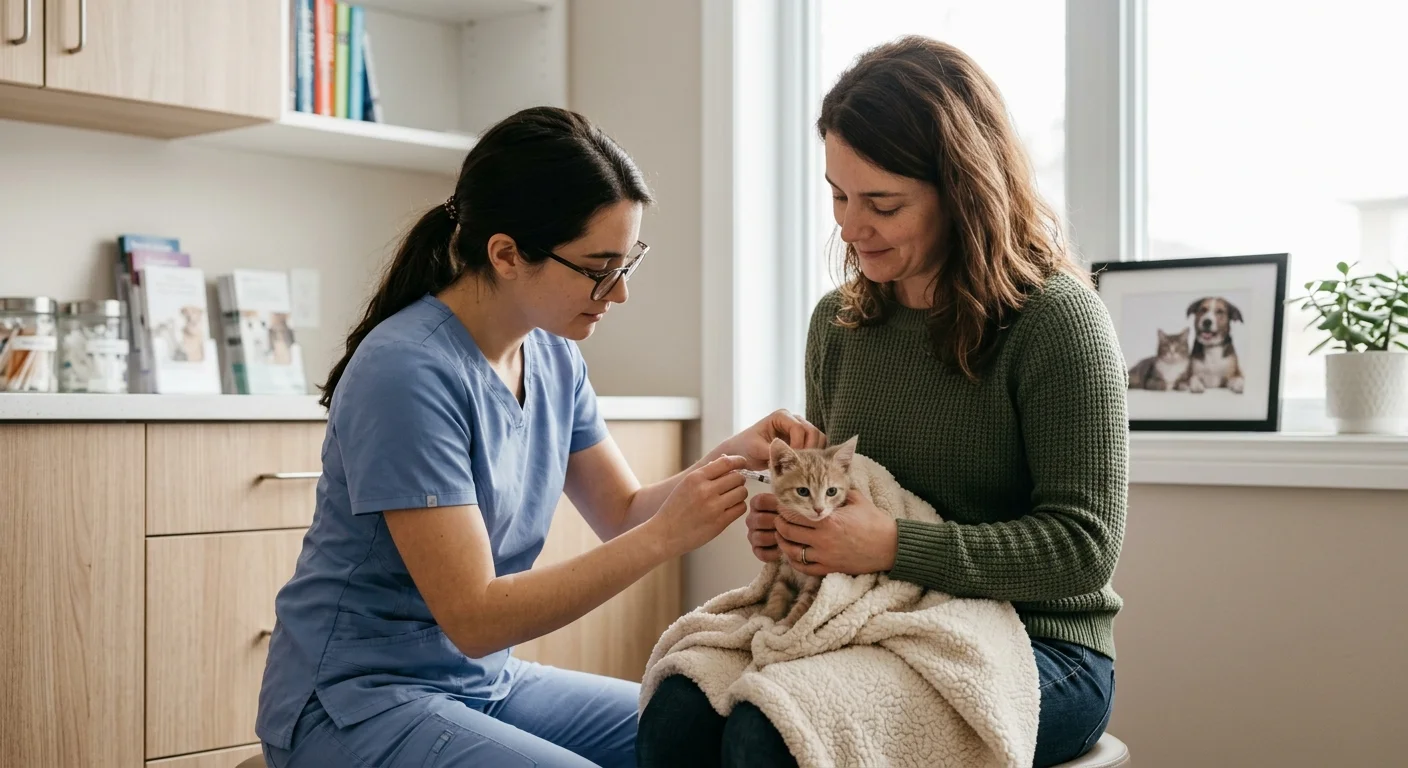
A kitten needs several rounds of shots before they're fully protected, and one of them even requires a blood test first. Here's the actual schedule: what each shot covers, when boosters are due after that, and which vaccines depend on how your cat actually lives.
What does a kitten actually need, and when?
Kittens get their first core vaccine around 6 to 8 weeks old, then a booster every 3 to 4 weeks until they're at least 16 weeks. The combined shot covers three diseases at once — feline herpesvirus, calicivirus, and panleukopenia — usually in one injection. The final dose, given at 16 weeks or later, matters most: it's timed to land after a kitten's maternal immunity has faded enough for the vaccine to actually take.
- Round 1, around 6–8 weeks: The first combined shot against feline herpesvirus, calicivirus, and panleukopenia.
- Round 2, around 10–12 weeks: The same combination, repeated. This is also when the first feline leukemia (FeLV) dose is usually given — but only after a blood test confirms your kitten doesn't already carry it.
- Round 3, around 14–16 weeks: The final core round, plus the second FeLV dose and often rabies, though rabies timing depends on where you live.
The FeLV test matters more than it might seem. Vaccinating a cat that already carries the virus doesn't help, and skipping the test to save time defeats the point of getting the vaccine in the first place.
What happens after the kitten series?
The core vaccines get a booster around one year old. After that, they typically move to a longer interval — often every three years. Rabies follows its own local schedule, since the interval depends on the law where you live and which vaccine your vet uses.
FeLV works differently as your cat gets older. It's core for every kitten under a year old, regardless of lifestyle, but past that age it becomes optional — worth keeping only if your cat actually goes outside or lives with cats whose FeLV status you don't know. A strictly indoor adult cat with no new housemates usually doesn't need it anymore.
This is where a phone reminder earns its keep. A vaccine that shifts from "every kitten needs this" to "ask your vet if this still applies" is easy to lose track of. A dated note that flags the change, rather than relying on memory, keeps it from slipping through.
Which extra vaccines does your cat actually need?
Past the core set, a few vaccines depend on real exposure rather than applying to every cat by default.
Feline leukemia, after age one
Worth continuing if your cat goes outdoors, or lives with other cats whose FeLV status isn't confirmed. Not worth it for a cat that stays reliably indoors in a stable, tested household.
Chlamydia and similar infections
Mainly relevant in multi-cat households or shelters where an infection has actually been confirmed — not something a typical single-cat home needs to consider.
Some other vaccines that sound reasonable — like one for feline infectious peritonitis — aren't generally recommended by current guidelines. If a vet suggests something outside the usual list, it's worth asking what specific risk it addresses.
What if you don't know your cat's vaccine history?
Same approach as with dogs: when in doubt, vets treat the cat as unvaccinated and start the core series again — including a fresh FeLV test, regardless of what you've been told about a cat's past. It isn't wasted effort. An extra core dose causes little more than mild soreness, while a real gap in protection is the bigger risk.
If you're rebuilding a missing record more broadly, here's a fuller guide to reconstructing a missing history. The same logic applies whether it's a cat or a dog.
This article is for general information only and does not replace professional veterinary advice. If you are worried about your pet's health, contact your veterinarian. In an emergency, call your nearest clinic immediately.
Frequently asked questions
Do indoor-only cats need the FeLV vaccine?
As a kitten, yes — FeLV is core for every kitten under a year old, indoor or not, because young cats are especially vulnerable and their future lifestyle isn't always settled yet. Past that first year, it becomes optional for a cat that stays reliably indoors with no new cats joining the household. Ask your vet to weigh your cat's actual situation rather than defaulting either way.
Why does the FeLV vaccine need a blood test first?
Vaccinating a cat that's already infected with FeLV doesn't help, and it can make it harder to know later whether a positive test reflects a real infection or the vaccine itself. Testing first also catches an existing infection early enough that it can actually inform treatment, which is reason enough on its own.
What if I adopt an adult cat with no vaccine records?
Vets typically restart the core series from the beginning and retest for FeLV, regardless of what you're told about the cat's history — claimed vaccination records without paperwork aren't treated as reliable. It's not wasted effort: an extra core dose causes little more than mild soreness, while a real gap in protection is the bigger risk.
Are there real risks or side effects from cat vaccines?
A quiet, slightly tired day afterward is common and not a concern. Serious reactions are rare. Watch for facial swelling, hives, or vomiting shortly after a shot — that combination needs a same-day call to your vet rather than a wait-and-see approach.
Can my cat skip vaccines entirely if they never go outside?
No. One of the core diseases, panleukopenia, survives for long periods outside a host, so it can arrive on shoes, clothing, or another pet without your cat ever going outside. Staying indoors lowers exposure, but the core vaccines exist precisely because that risk doesn't fully disappear.
The information provided on this blog is for educational and informational purposes only and does not constitute veterinary medical advice. Always consult a qualified veterinarian for any questions regarding your pet's health or behavior.