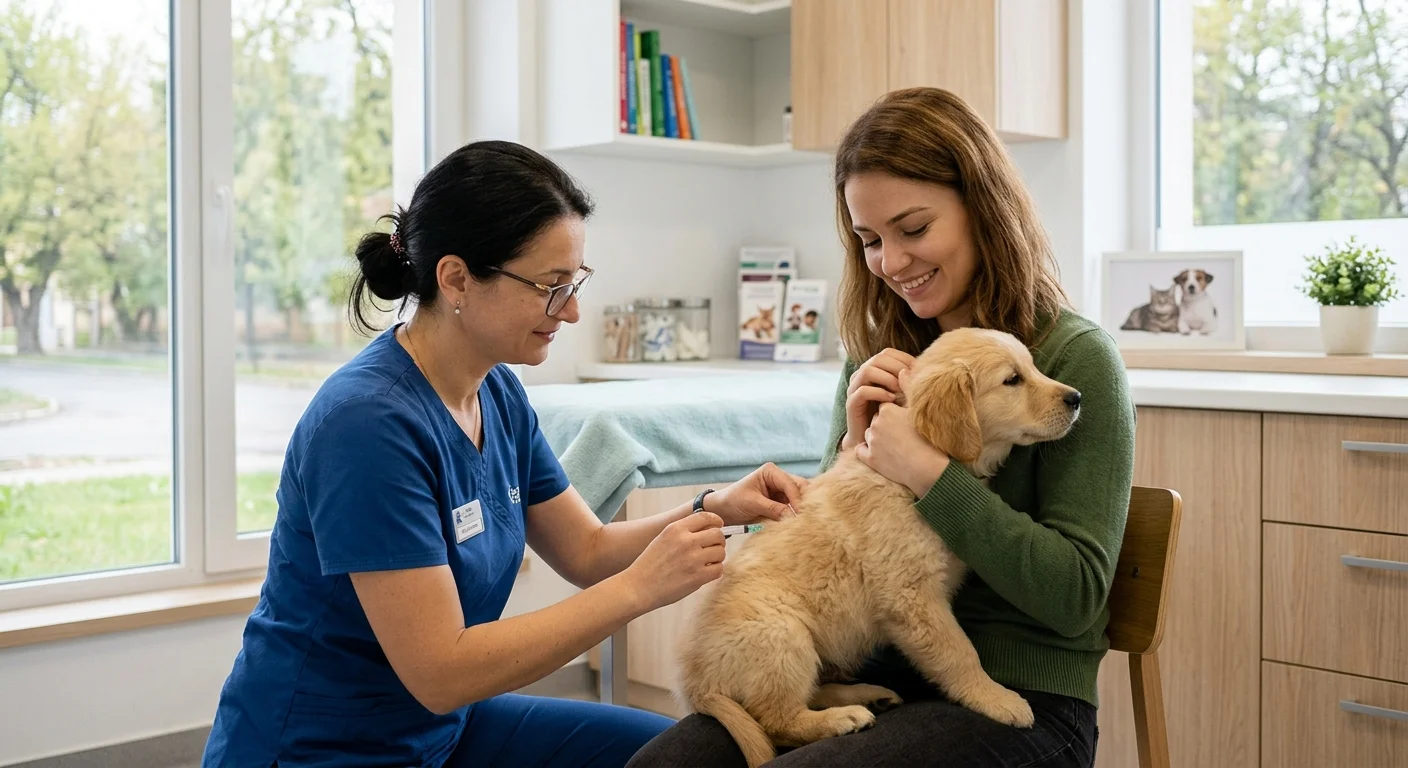
A puppy needs several rounds of shots before they're fully protected, and the gaps between doses matter as much as the doses themselves. Miss a window and the series may need to restart. Here's the actual schedule: what each shot covers, when boosters are due after that, and which extra vaccines depend on how your dog actually lives.
What does a puppy actually need, and when?
Puppies get their first shots around 6 to 8 weeks old, then a booster every 3 to 4 weeks until they're about 16 weeks. Three or four rounds total is typical. Each round covers the same core diseases — distemper, hepatitis, and parvovirus, usually combined into one shot — and repeating it isn't redundant. A puppy's mother passes along temporary immunity that fades unpredictably, so the repeated doses exist to catch whichever puppy's protection fades earliest.
- Round 1, around 6–8 weeks: The first combined shot against distemper, hepatitis, and parvovirus.
- Round 2, around 10–12 weeks: The same combination, repeated.
- Round 3, around 14–16 weeks: The final core round. Rabies is often given around this age too, though the exact timing depends on where you live.
If your vet recommends a fourth round past 16 weeks, it isn't overcautious. Some puppies' maternal immunity lingers longer than usual and blocks the vaccine from working until later.
What happens after the puppy series?
Every core vaccine gets a booster at around one year old, regardless of how many puppy doses came before it. After that first adult booster, most core vaccines move to a longer interval — commonly every three years , though your vet may space rabies differently depending on local law and which vaccine product they use.
This is where schedules quietly fall apart. A three-year gap is long enough that most owners forget entirely, and by the time a reminder from the clinic arrives in the mail, the appointment is already overdue. (This is the exact gap a phone reminder closes — set once for a vaccine that repeats every three years, it doesn't depend on you remembering, or on a clinic's mailing list still having your current address.)
Which extra vaccines does your dog actually need?
Core vaccines protect against diseases serious enough that every dog gets them. Everything past that depends on how your dog actually lives — where you are, and what they're exposed to.
Kennel cough
Worth it if your dog boards, goes to daycare, gets groomed professionally, or spends time at dog parks — anywhere dogs breathe on each other in close quarters. Usually needed every six to twelve months rather than annually, since the protection is shorter-lived than the core vaccines.
Leptospirosis
Worth discussing if your dog drinks from puddles, streams, or other standing water, or lives somewhere with a lot of wildlife nearby — the bacteria spreads through infected urine in water and soil. It has become a more commonly recommended vaccine in many areas over the past years, even for dogs that don't fit the classic outdoor profile.
Lyme disease
Relevant if you're in a region with a real tick population, especially wooded or grassy areas. Not every region has meaningful Lyme risk, so this is one to ask your vet about rather than assume you need it.
Canine influenza
Mainly relevant for dogs in high-contact settings — boarding, shows, group training classes — for similar reasons to kennel cough. Most dogs that mostly stay home don't need it.
What if you don't know your dog's vaccine history?
A rescue with an unknown past is common enough that vets have a standard approach: when in doubt, treat the dog as unvaccinated and restart the core series. It isn't wasted effort. An extra core vaccine causes little more than mild soreness, while a real gap in protection can be dangerous.
If you're rebuilding a missing record more broadly — not just vaccines, but the whole medical picture — here's a fuller guide to reconstructing a missing history. Once you have a starting point, even an estimated one, keeping the record going from here is the easier half.
This article is for general information only and does not replace professional veterinary advice. If you are worried about your pet's health, contact your veterinarian. In an emergency, call your nearest clinic immediately.
Frequently asked questions
Can I give my puppy's vaccines myself to save money?
Some core vaccines are sold over the counter in certain places, but timing mistakes and improper storage are common problems with DIY doses. A vet visit also catches things a self-given shot wouldn't — early parasites, growth concerns, a heart murmur. For the puppy series especially, the visit is doing more than just the injection.
What if I miss a booster appointment by a few weeks?
For an adult dog, a few weeks rarely matters — book the next available appointment and move on. The puppy series is more time-sensitive, since it's racing a fading window of maternal immunity. A long gap there may mean your vet recommends restarting the count rather than picking up where you left off.
Do indoor-only dogs still need all the core vaccines?
Yes. Core diseases like parvovirus can arrive on shoes, on another pet, or during a brief trip outside to the yard. Staying indoors most of the time reduces exposure, but it doesn't remove it, and the core vaccines protect against diseases serious enough that the small remaining risk still matters.
Are there real risks or side effects from vaccines?
Mild soreness or a quiet, tired day afterward is common and not a concern. Serious reactions are rare. Watch for facial swelling, hives, or vomiting shortly after a shot — that combination needs a same-day call to your vet, not a wait-and-see approach.
Does my dog need a vaccine for every disease that exists?
No — that's exactly why the core and non-core split exists. Core vaccines cover the diseases serious and widespread enough that every dog needs them. Non-core vaccines get added only when your dog's actual lifestyle or location creates real exposure, not as a default.

The information provided on this blog is for educational and informational purposes only and does not constitute veterinary medical advice. Always consult a qualified veterinarian for any questions regarding your pet's health or behavior.