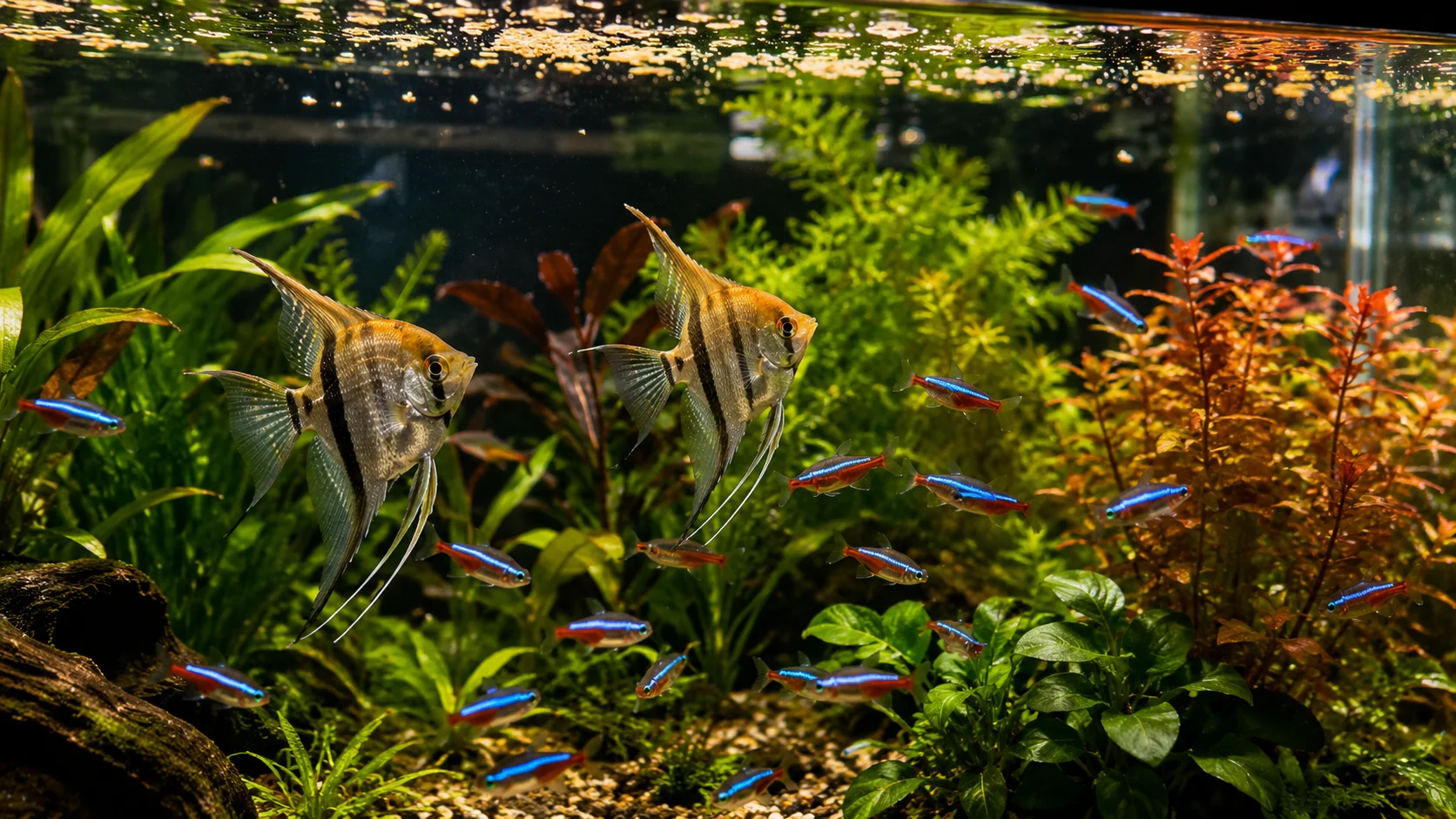
Feeding aquarium fish might seem like the simplest part of fishkeeping: just pinch some flakes, drop them in the tank, and watch the feeding frenzy. However, fish nutrition is a delicate balance. In the wild, fish spend hours foraging for a diverse diet of insects, algae, micro-crustaceans, and plant matter. In a closed aquarium, they rely entirely on what you provide.
Understanding proper fish nutrition directly impacts water quality, immune health, color intensity, and lifespan. In fact, incorrect feeding habits and overfeeding account for over 70% of sudden water quality collapses for beginner fishkeepers.
Understanding Fish Diets: Carnivores, Herbivores, and Omnivores
Before buying fish food, you must know the natural dietary requirements of your species. Feeding a meat-heavy diet to a strict herbivore can cause severe digestive blockages.
1. Carnivores (Meat Eaters)
Species like Betta fish (Betta splendens), Discus, Angelfish, and Cichlids require high-protein diets (45% to 55%) derived from aquatic organisms. Their digestive tracts are short, optimized for fast processing of concentrated protein. Look for ingredients like whole fish meal, shrimp, krill, squid, and bloodworms.
2. Herbivores (Plant & Algae Eaters)
Species such as Plecostomus, Otocinclus, Mollies, and Silver Dollars demand diets rich in plant matter, spirulina, and fiber (up to 10–12%). They have long digestive tracts designed to break down tough plant cellulose. Excess animal protein causes severe bloating (known as Malawi Bloat) and intestinal damage.
3. Omnivores (Mixed Diets)
Popular community fish like Guppies, Tetras, Danios, Barbs, and Corydoras thrive on a balanced combination of proteins (35–40%) and plant nutrients. They adapt well to a wide variety of high-quality feeds.
Analysis of Fish Food Types
Offering a single type of dry food day after day leads to nutritional deficiencies. A varied diet ensures your fish receive essential vitamins, minerals, and carotenoids.
1. Flakes
- Best For: Top and mid-water surface feeders (Tetras, Guppies, Platies).
- Advantages: Palatable, easily crumbled for small mouths, widely available.
- Drawbacks: Leaches vitamins quickly into water and oxidizes fast once opened.
2. Pellets & Micro-pellets
- Best For: Mid-water swimmers, Cichlids, and predatory fish.
- Advantages: High nutrient density, slow-dissolving, keeps water cleaner.
- Drawbacks: Hard pellets can cause bloat if consumed dry; pick the correct size.
3. Sinking Wafers & Tablets
- Best For: Bottom dwellers (Corydoras, Plecos, Loaches).
- Advantages: Sinks instantly; hard texture helps wear down mouthparts.
- Drawbacks: Fast top-feeders may steal them before they reach the substrate.
4. Frozen Foods
- Best For: Carnivores, Discus, and picky or wild-caught species.
- Advantages: High protein, retains natural enzymes (Bloodworms, Artemia).
- Drawbacks: Must be thawed and rinsed first; liquid can add excess phosphates.
5. Freeze-Dried Foods
- Best For: All species as an occasional weekly treat.
- Advantages: 100% pathogen-free with a long shelf-life (Daphnia, Krill).
- Drawbacks: Must be pre-soaked in tank water to prevent swelling in the stomach.
6. Live Foods
- Best For: Wild-caught species and breeding pairs.
- Advantages: Triggers hunting instincts and conditions fish for spawning.
- Drawbacks: High risk of introducing bacteria, parasites, and disease.
Water Chemistry and Overfeeding Risks
Overfeeding rarely kills fish by bursting their stomachs—it destroys their water quality instead.
When excess food settles into the tank, bacterial decomposition triggers a harmful chain reaction in the Nitrogen Cycle:
- Ammonia (NH3) Spikes: Uneaten protein food breaks down into toxic free ammonia. Levels above 0.25 mg/L burn fish gills and cause severe stress.
- Nitrite (NO2) Poisoning: Beneficial bacteria convert ammonia into nitrites, which block the oxygen-carrying capacity of fish blood.
- Nitrate (NO3) and Phosphate (PO4) Accumulation: Chronic overfeeding acts as fertilizer for unwanted algae outbreaks (black beard algae, cyanobacteria, hair algae).
- Dissolved Oxygen Depletion: Decomposing organic matter consumes vast amounts of oxygen, which can cause sudden fish die-offs at night.
Feeding Schedules: How Much and How Often?
The golden rule of fishkeeping: "An underfed fish is a healthy fish; an overfed fish is in grave danger."
The 2-Minute Rule
Offer only the amount of food your fish can finish within 2 minutes. Any food resting on the substrate after 3 minutes should be siphoned out immediately.
Daily Frequency
- Adult Community Fish: Feed once daily (or twice in tiny micro-amounts), 5 to 6 days a week.
- Fry (Baby Fish): Require 3 to 5 small, nutrient-dense feedings daily for rapid growth.
- Fasting Day: Implement one fasting day per week (no food for 24 hours). This clears their digestive tract, prevents constipation, and reduces tank waste.
Color Enhancers and Vitamin Supplements
To maintain peak health and vibrant colors, look for these beneficial additives in your fish food:
- Carotenoids & Astaxanthin: Pigments found in krill and spirulina that intensify red, orange, and yellow hues in Goldfish, Discus, and Guppies.
- Stabilized Vitamin C: Essential for healing damaged fins, tissue repair, and boosting immune response.
- Garlic Extract: Acts as a natural appetite stimulant for stressed or newly introduced fish.
⚠ Emergency Protocol: What to Do If You Overfeed
If a container slips and dumps excess food into the tank, act fast:
- Turn off the filter temporarily: Stop the filter for 10 minutes so food isn't pulled deep into the filter media.
- Siphon the substrate: Vacuum out all fallen food immediately using a gravel cleaner.
- Perform a 30–50% water change: Replace removed water with fresh, dechlorinated water matched to the tank temperature.
- Add beneficial bacteria: Dose liquid nitrifying bacteria to help process incoming ammonia spikes.
- Fast the tank for 3 days: Do not offer food for 72 hours. Healthy fish will easily survive while the ecosystem recovers.
Frequently Asked Questions (FAQ)
How long can fish survive without food while on vacation?
Healthy adult fish can go without food for 7 to 10 days without harm. Avoid plaster "holiday food blocks" as they dissolve and ruin water quality.
Why do my fish spit out their food?
Fish spit out food if the pellets are too hard or large, if they dislike a new brand, or if they have an internal health issue. Try soaking dry food in tank water first.
How long is dry fish food good for after opening?
Essential vitamins oxidize rapidly once opened. Dry food loses over 50% of its nutritional value within 3 months. Buy smaller containers that you finish within 60 to 90 days.
Healthy Feeding, Thriving Aquarium
Mastering fish nutrition is rooted in moderation and diversity. By offering the right food types and resisting the urge to overfeed, you will keep your water crystal clear and your fish vibrant and healthy.
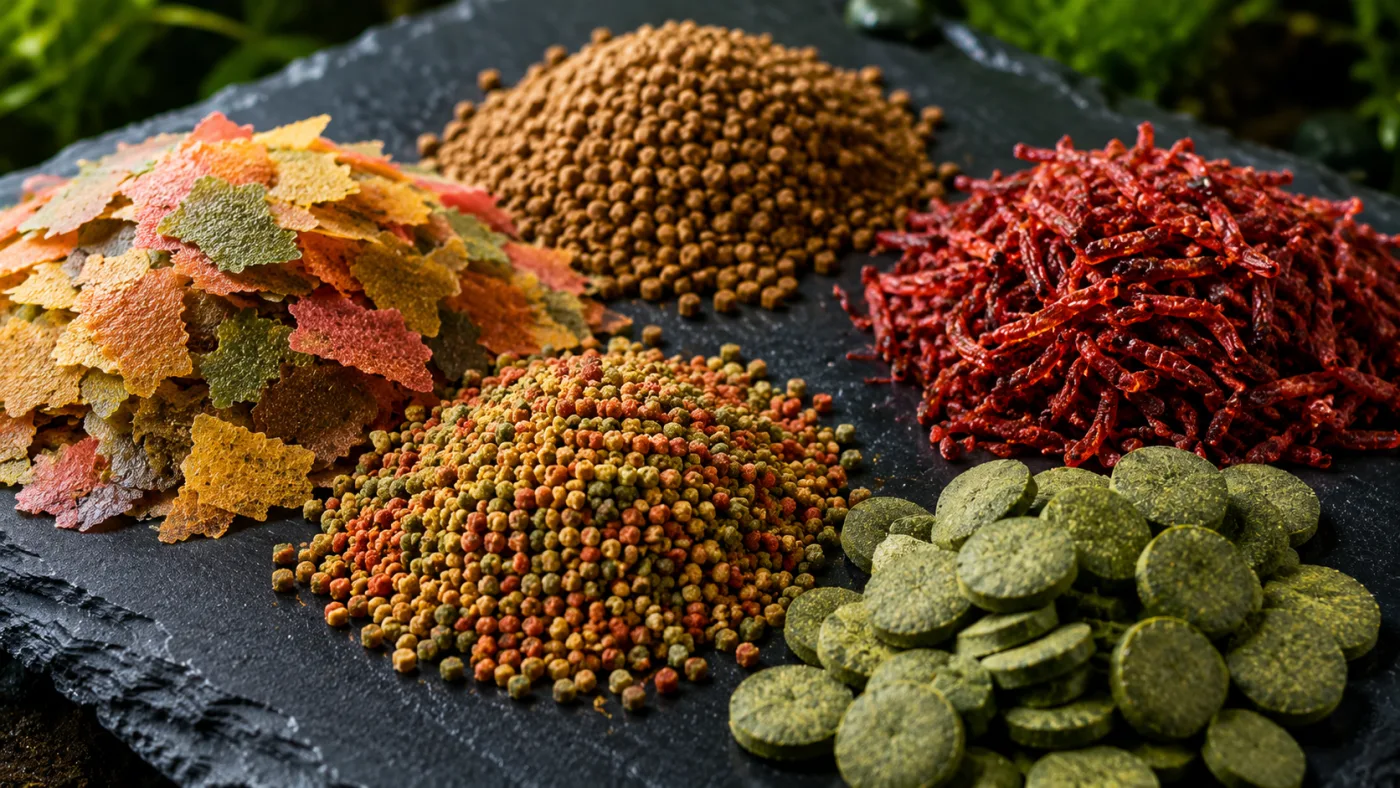
The information provided on this blog is for educational and informational purposes only and does not constitute veterinary medical advice. Always consult a qualified veterinarian for any questions regarding your pet's health or behavior.