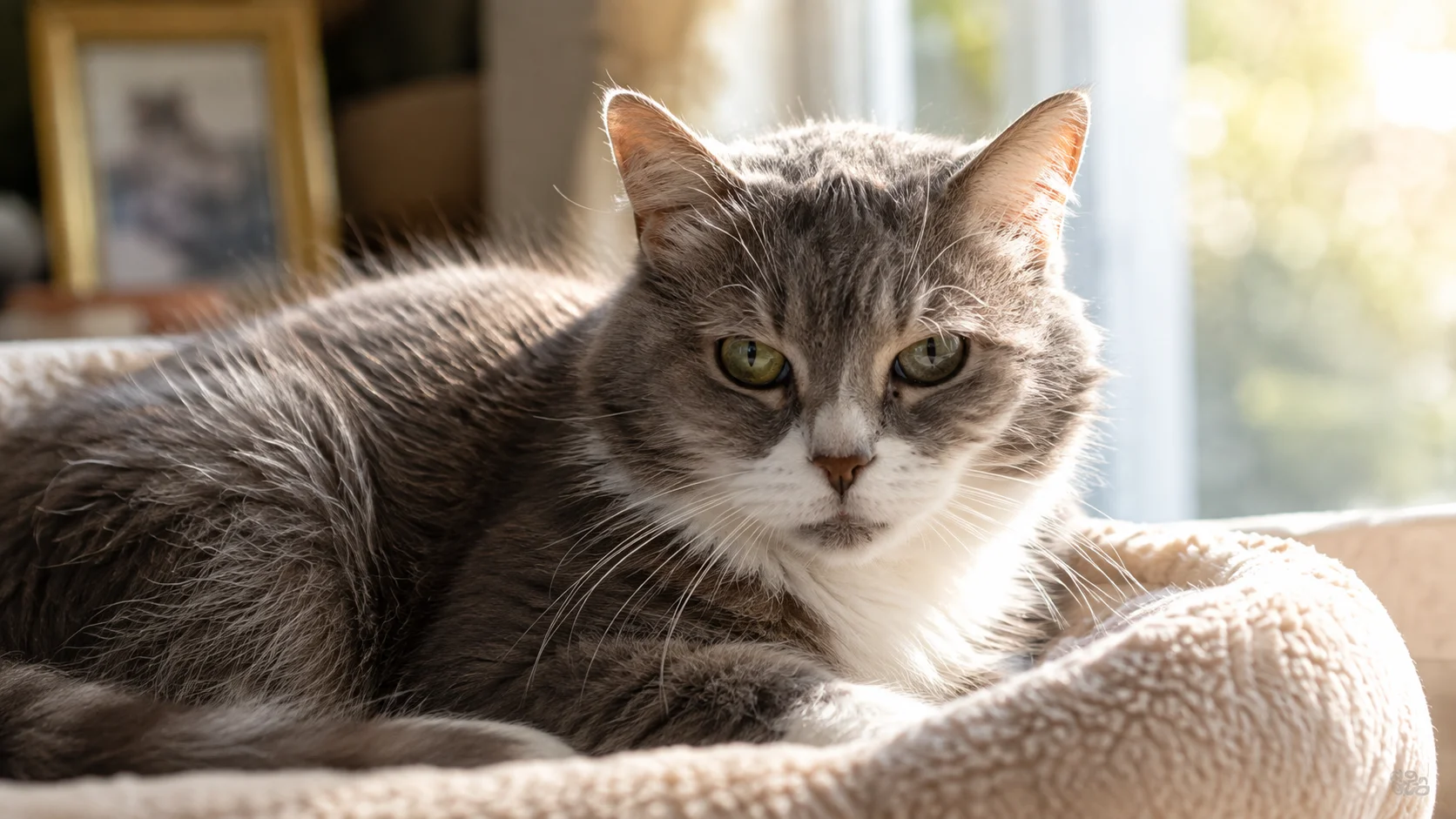
It often happens without us even realizing it. You notice your dog taking a little longer to get up from their bed after an afternoon nap, or your cat deciding that jumping onto the windowsill isn't worth the effort anymore.
It is very easy to pass off these moments with a gentle sigh and a smile, telling yourself: "Well, they're just getting older."
While aging is natural, a subtle or sudden drop in mobility, appetite, or energy isn't always just the passage of time. More often than not, it is the first sign of a manageable chronic condition — like osteoarthritis, kidney disease, diabetes, or thyroid imbalances. Catching these early shifts makes a world of difference in your pet's comfort, longevity, and overall quality of life.
The Masking Effect: What Isn't "Just Old Age"
Senior pets rarely complain out loud. They adapt. Unlike humans, dogs and cats don't vocalize daily aches unless the pain becomes sudden or severe. Instead, they quietly alter their behaviors to cope.
A cat suffering from joint inflammation won't necessarily meow; she will simply stop jumping onto her favorite high spots, choosing to sleep on the sofa or the floor instead. A dog with early-stage kidney disease won't look sick overnight; he'll just drink slightly more water, sleep a bit deeper, and ask to go outside once more during the night.
Because these adjustments happen slowly over weeks or months, they easily blend into the background of daily life.
Subtle Red Flags to Watch For:
- Mobility & Posture Shifts: Hesitation before climbing stairs, shorter strides on walks, or slight trembling in the hind legs when standing up.
- Changes in Drinking & Urination: Filling the water bowl more frequently or sudden accidents indoors despite being house-trained.
- Weight & Muscle Fluctuations: Gradual loss of muscle mass along the spine and hips, even if food intake remains the same.
- Altered Sleep Patterns: Nighttime restlessness, wandering on hard floors, or sleeping excessively during hours they used to be active.
- Uncharacteristic Irritability: Recoiling or stiffening when petted along the lower back, hips, or joints, which often points to hidden pain.
Noticing these signs isn't a cause for panic — it's about gathering clear information for your veterinarian so you can adapt their routine together.
The Hidden Reality of Chronic Pain in Pets
Pain in senior animals is widely misunderstood. Many owners expect a pet in pain to limp dramatically, whine, or refuse food. In reality, chronic pain in a dog or cat looks much more like fatigue, withdrawal, or loss of interest in toys and family activities.
When an animal lives with ongoing joint or organ discomfort, their brain spends immense energy processing that sensation. This leaves them in a state of quiet exhaustion. When you notice your companion sleeping 18 hours a day instead of their usual 14, it isn’t necessarily laziness — sometimes it’s the only way their body handles unaddressed physical stress.
Managing senior pain isn't just about prescribing heavy medications; it requires an integrated approach combining joint supplements, weight management, gentle physical therapy, and attentive daily care.
The Daily Struggle: Managing Complex Medication Routines
When a senior pet is diagnosed with a chronic condition, your vet visit usually ends with a strict new routine: an anti-inflammatory tablet in the morning with food, a heart pill every 12 hours, a liquid joint supplement once a day, and eye drops twice daily.
At first, management seems straightforward. You write it down on a sticky note. But as weeks turn into months, life gets busy, work schedules shift, and fatigue sets in.
Common daily questions naturally arise:
- Did I give the morning dose before leaving for work, or was that yesterday?
- Did my partner already administer the evening pain reliever, or are they waiting for me to do it?
- Is it time to refill the prescription, or do we have enough pills for the weekend?
Tracking long-term treatment can quickly become a mental burden. When doses are missed, delayed, or accidentally doubled, your pet's physical comfort suffers directly.
Adapting Your Home for Senior Comfort
Beyond medical treatments, small adjustments around the house can dramatically improve a senior pet's daily life. As joints stiffen and vision or hearing slightly dim, the environment needs to adapt to them.
Practical Home Adjustments:
- Non-Slip Flooring: Hardwood, tile, and laminate floors are like ice rinks for senior pets with weakened hips. Placing non-slip rugs or runners along their common pathways restores traction and confidence.
- Orthopedic Bedding: Thin beds on cold floors no longer support aching joints. High-density memory foam beds distribute weight evenly and relieve pressure points on hips and elbows.
- Elevated Bowls: Raising food and water bowls a few inches off the ground prevents senior dogs and cats from straining their necks and spines while eating.
- Ramps and Low-Entry Boxes: Using ramps for couches or cars minimizes joint impact. For cats, switching to a litter box with a low front entry eliminates the strain of jumping.
Streamlining Senior Pet Care with Keia
Caring for an aging companion should be about cherishing quiet, affectionate moments together — not worrying over missed doses or lost medical records.
Here is how Keia supports you in guiding your senior pet through their golden years:
- Smart Medication Reminders: Set precise alerts for morning, afternoon, or evening doses. Family members get notified, ensuring no pill is ever missed or doubled.
- Symptom & Mobility Logging: Record good days and bad days in seconds. Log a quick video of a limp or note a shift in appetite to build a clear history for vet checkups.
- Weight Tracking Trends: Gradual weight loss is one of the earliest signs of kidney or thyroid issues. Weekly weight logs help you spot trends long before they become visible to the eye.
- Centralized Health Records: Keep bloodwork, X-rays, prescriptions, and vet contact info in one secure place, accessible in a single tap during midnight emergencies.
- Shared Caregiver Access: Share exact routines, health history, and care instructions with family members or pet sitters, ensuring seamless care when you are away.
Embracing the Golden Years
Our pets give us the best years of their lives, and their golden years can be one of the most rewarding chapters you share together. They move a little slower, sleep a little deeper, and appreciate your quiet presence more than ever.
By staying attentive to their subtle shifts, adapting their environment, and staying organized with their health routine, you give them the peaceful, comfortable, and dignified senior life they truly deserve.

The information provided on this blog is for educational and informational purposes only and does not constitute veterinary medical advice. Always consult a qualified veterinarian for any questions regarding your pet's health or behavior.