
If you have ever shared your home with a guinea pig, you already know they are far from quiet. Unlike hamsters or mice, which tend to go about their lives in relative silence, cavies are extraordinarily vocal and communicative. The moment a refrigerator door swings open or a plastic bag rustles in the kitchen, the room erupts in a chorus of high-pitched squeaks. But those loud demands for food are only a tiny fraction of how guinea pigs talk to us and to each other.
Because guinea pigs are prey animals, their survival in the wild depended on staying constantly connected with their herd while keeping a sharp eye out for danger. Over thousands of years, they developed a rich vocabulary of squeaks, purrs, chirps, and physical movements. Every sound they make, every twitch of their ears, and every sudden leap into the air carries a specific emotional meaning. Learning to read these subtle signals changes everything. It helps you catch health problems early, prevents fights between cage mates, and builds a deep level of trust.
The Vocal Dictionary: Understanding Cavy Sounds
Listening to a group of guinea pigs interact feels a bit like eavesdropping on a lively conversation. Once you know what to listen for, you will start recognizing clear patterns in their daily vocalizations.
The "Wheek": A Demand for Goodies
The "wheek" is the quintessential guinea pig noise. It is a long, loud, rising whistle that can easily be heard from another room. Researchers believe wild cavies rarely used this specific sound; it is a vocalization domestic guinea pigs created almost entirely to communicate with human beings.
When your piggie wheeks, they are expressing pure excitement, anticipation, and impatience. They associate specific household sounds—like a chopping board clicking, a fridge door opening, or your footsteps approaching—with fresh vegetables. It translates directly to: "I know you have food, and I want it right now!"
Rumbling and Rumble-Strutting
A rumble is a low, vibrating sound that reverberates through the guinea pig's whole body. It is almost always paired with a slow, exaggerated walk where the piggie sways their hips from side to side—a movement owners call the "rumble-strut."
This behavior serves two main purposes depending on the context:
- Courtship: A male (boar) will rumble-strut around a female (sow) to win her favor.
- Dominance: Both males and females use rumbling to assert authority over cage mates and claim prime resting spots or territory.
Purring: Contentment vs. Irritation
Unlike cats, who purr continuously when happy, a guinea pig’s purr can mean opposite things depending on its pitch and length.
- The Soft, Low Purr: If your piggie is lying on your lap, completely relaxed with their eyes half-closed, and making a deep purring sound, they feel safe and content.
- The Short, High-Pitched Purr: A quick, sharp purr accompanied by a sudden freezing posture means your pet is annoyed or startled by a noise, like a door latching or a phone ringing.
Teeth Chattering: A Clear Warning
Teeth chattering is a fast, metallic clicking sound made by rapidly grinding the front teeth together. It is usually accompanied by a stiff body, wide eyes, and raised hair around the neck.
This is a direct warning that translates to: "Back off, or I will bite." If two guinea pigs are standing nose-to-nose and chattering their teeth, they are on the verge of a physical fight. Never reach in with bare hands; use a thick towel to separate them safely.
Chirping: The Mysterious Bird Call
Occasionally, an owner will hear a sound that sounds exactly like a wild bird chirping in their living room. Chirping is rare, rhythmic, and can go on for several minutes while the guinea pig sits in a trance-like state. It appears most often after a sudden scare, acting as an instinctual alarm signal for the rest of the herd.
Reading Body Language: Physical Signals
A guinea pig’s body tells you just as much as their voice. Paying attention to how they move gives you a clear window into their mood.
Popcorning: Pure Unfiltered Joy
Without warning, a happy guinea pig will leap straight into the air, twist their body, kick their back legs out, and land before dashing off in a sprint. It looks remarkably like a kernel of corn popping in hot oil. Popcorning is a physical release of pure joy and playfulness, seen often in young, energetic piggies.
Freezing in Place
If a loud sound echoes or a shadow moves quickly overhead, every guinea pig in the room will instantly freeze. They lock their joints, widen their eyes, and stop chewing mid-bite. This is an ancient prey instinct to blend into their surroundings and avoid predators.
Head Tossing and Chin Raising
When two guinea pigs meet face-to-face, you might notice them flipping their noses up in the air. The piggie that holds their chin higher is claiming a higher rank in the herd. If your pet forcefully pushes your hand upward with their snout while being petted, they are politely saying: "That's enough touching for now."
Herd Dynamics and Social Boundaries
Guinea pigs are deeply social animals, and living together means managing a social hierarchy. When watching a bonded pair or introducing new pigs, you will notice a few ongoing behaviors:
- Mounting: Both males and females will mount each other to establish dominance, regardless of gender.
- Nipping vs. Biting: A soft, quick nip without breaking skin is normal communication (e.g., "you are in my space"). A hard bite that leaves a wound indicates severe aggression or panic.
- Barbering: Continuously chewing off a cage mate's fur can be a sign of dominance, boredom, or a lack of long fiber (hay) in their diet.
Spotting the Difference Between Fear and Illness
Because guinea pigs hide weakness to avoid looking like easy targets, changes in behavior are often the first warning sign of illness:
- Lethargy and Hiding All Day: While hiding is normal during nap time, staying hidden constantly without coming out for treats usually indicates pain or illness.
- Refusing Fresh Vegetables: Passing on veggies is rarely just picky eating; it is a common early indicator of dental issues or gastrointestinal stasis.
- Hunching Up with Puffed Fur: Sitting in a corner with a rounded back and puffed coat is a strong visual cue that your pet is experiencing internal pain or infection.
- Crying During Elimination: Vocalizing loudly while trying to pass stool or urine is a medical emergency that often points to bladder stones.
Simple Ways to Keep Your Guinea Pigs Happy
- Provide Multiple Resources: Prevent fights by setting out two water bottles, two food bowls, and hideouts with two doorways so submissive piggies never get trapped.
- Respect Their Limits: If your pet chatters their teeth or turns away, put them back in their enclosure to build long-term trust.
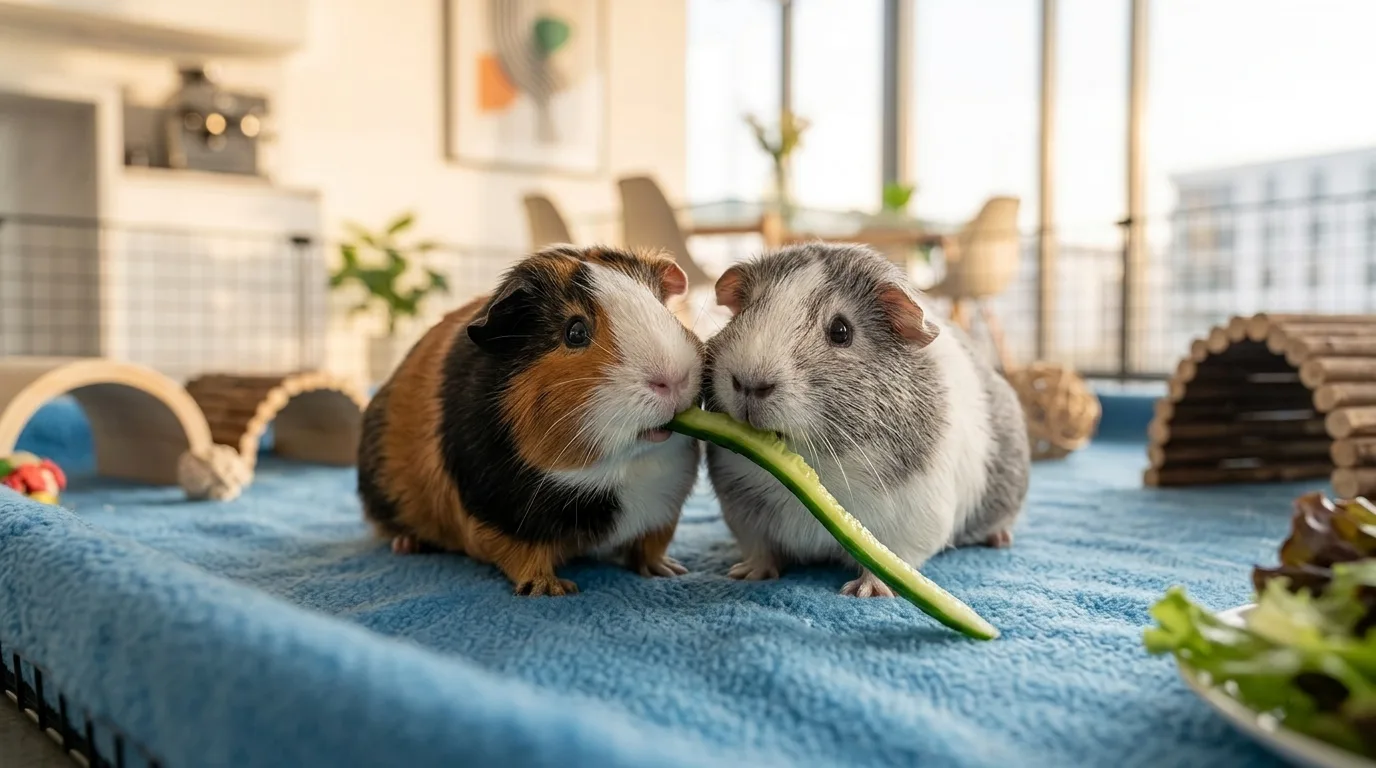
- Give Them Daily Floor Time: Set up a safe playpen on a soft towel with cardboard tubes and fleece tunnels to encourage natural exercise.
- Do Weekly Weight Checks: Weighing your guinea pigs weekly on a digital scale helps you catch weight loss—the first sign of illness—before physical symptoms appear.
By observing their daily habits and listening to their sounds, you build a rewarding bond with these expressive, affectionate companions.
The information provided on this blog is for educational and informational purposes only and does not constitute veterinary medical advice. Always consult a qualified veterinarian for any questions regarding your pet's health or behavior.