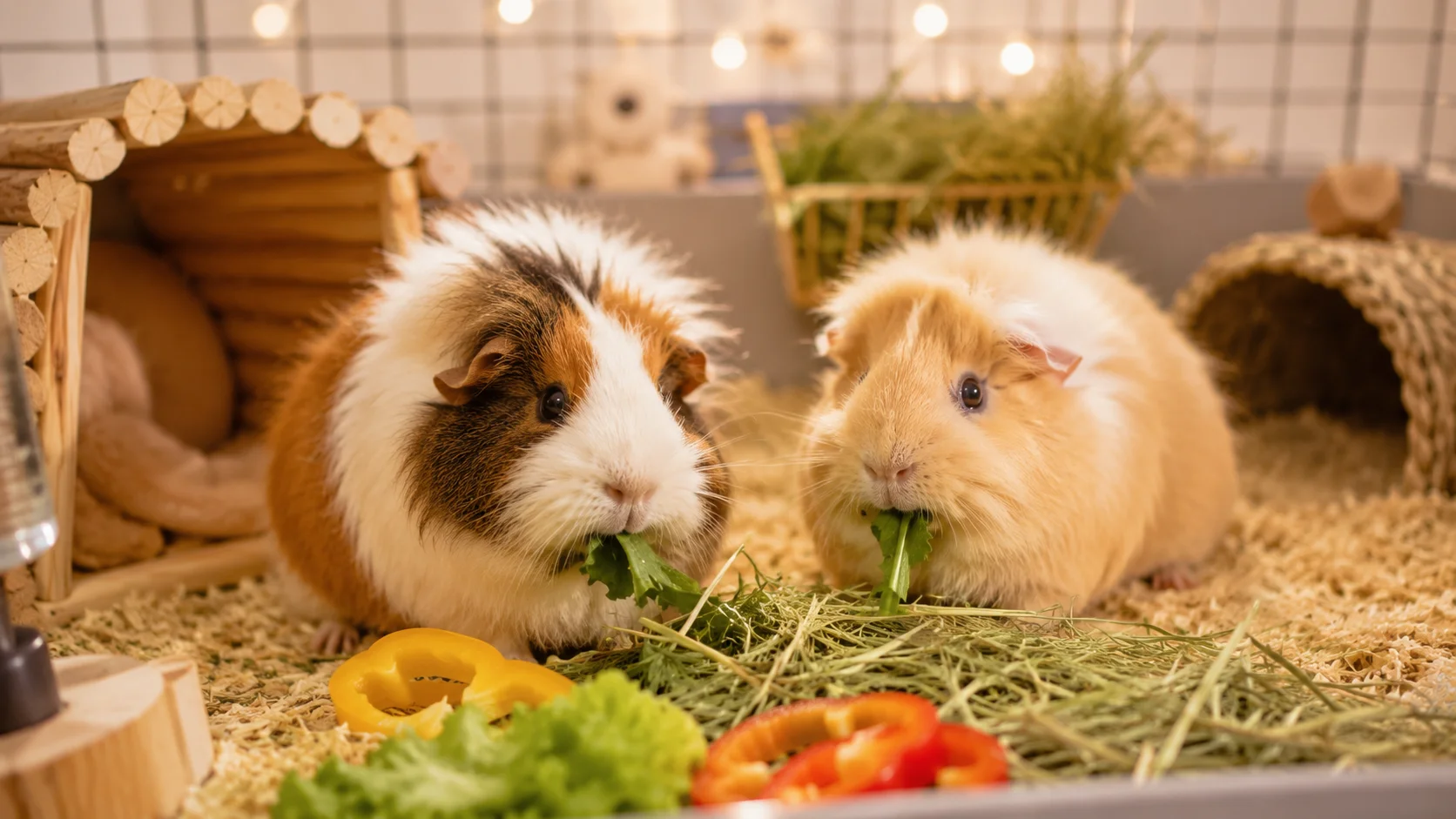
Guinea pigs (also known as cavies) are among the most charming, vocal, and rewarding small pets in the world. Famous for their cheerful "wheek wheek" squeaks when they hear the refrigerator door open, these gentle rodents make wonderful family companions. However, despite their small size, guinea pigs have complex biological needs that differ significantly from other pocket pets like hamsters or mice.
Proper cavie care revolves around three fundamental pillars: precise nutrition (specifically Vitamin C management), adequate living space, and social companionship. Understanding these critical requirements will prevent severe health complications and ensure your furry companions live long, vibrant lives.
The Essential Dietary Triad: Hay, Veggies, and Pellets
Unlike dogs or cats, a guinea pig’s digestive system requires continuous motion. Their diet must be high in fiber to maintain proper gut motility and naturally wear down their continuously growing teeth.
1. Grass Hay (80% of the Daily Diet)
- Unlimited Timothy Hay: High-quality grass hay, such as Timothy, Meadow, or Orchard grass, must be available 24/7. Hay provides the crude fiber necessary for healthy digestion and prevents fatal gastrointestinal stasis.
- Avoid Alfalfa for Adults: Alfalfa hay is rich in calcium and protein, making it great for pregnant cavies or pups under six months. However, feeding Alfalfa to adult guinea pigs can cause bladder stones and kidney issues due to excess calcium.
2. Fresh Daily Vegetables (15% of the Daily Diet)
- Leafy Greens First: Offer about one cup of fresh vegetables per guinea pig daily. Focus on dark leafy greens like Romaine lettuce, red leaf lettuce, cilantro, and parsley.
- Avoid Iceberg Lettuce: Iceberg lettuce contains virtually no nutritional value, has high water content that causes diarrhea, and contains compounds that can harm your pet in large amounts.
3. Plain Fortified Pellets (5% of the Daily Diet)
- Choose Plain Timothy-Based Pellets: Offer approximately 1/8 cup of plain, uniform pellets formulated specifically for guinea pigs daily.
- Say No to Muesli/Seed Mixes: Avoid colorful commercial mixes containing seeds, nuts, dried fruits, or colored bits. Guinea pigs will selectively eat the unhealthy parts, leading to obesity and severe nutritional deficiencies. Seeds also pose a dangerous choking hazard.
The Crucial Role of Vitamin C
One of the most important biological facts about guinea pigs is that, like humans, they cannot manufacture their own Vitamin C (ascorbic acid). They rely entirely on their daily diet to obtain it.
Why Vitamin C Matters
- Preventing Scurvy: A lack of Vitamin C leads to scurvy, a painful condition characterized by swollen joints, bleeding gums, lethargy, poor hair coat, loss of appetite, and internal bleeding.
- Daily Requirements: An adult guinea pig needs approximately 10 to 30 mg of Vitamin C daily. Pregnant, nursing, or sick individuals may require up to 50 mg per day.
Best Sources of Vitamin C
- Bell Peppers: Red, yellow, and green bell peppers are exceptional daily sources of Vitamin C. Red bell peppers contain the highest concentration.
- Stabilized Vitamin C Pellets & Supplements: High-quality guinea pig pellets contain stabilized Vitamin C. You can also offer chewable Vitamin C tablets specifically formulated for small animals.
⚠ Crucial Warning: Never add Vitamin C drops or tablets to your guinea pig's water bottle. The vitamin degrades rapidly when exposed to light, changes the flavor of the water (which may cause your pet to stop drinking entirely), and makes it impossible to measure actual intake.
Creating the Perfect Habitat: C&C Cages and Space
The small plastic cages sold in traditional pet stores are vastly inadequate for guinea pigs. Cavies are terrestrial animals that need horizontal floor space to run, exercise, and play.
Minimum Cage Size Requirements
- Single or Pair: A minimum of 7.5 to 10 square feet of flat floor space is required for a pair of guinea pigs. Larger is always better!
- C&C (Cube and Coroplast) Cages: Modular C&C cages are the gold standard in cavie care. They are affordable, fully customizable, easy to clean, and provide excellent ventilation.
Bedding Options
- Fleece Liners: Using fleece with an absorbent layer underneath (like mattress pads or puppy pads) is popular, eco-friendly, and soft on sensitive paws.
- Paper Bedding: Dust-free paper bedding is another safe choice. Avoid cedar or untreated pine wood shavings, as their aromatic oils cause severe respiratory damage.
Social Needs: The Importance of Keeping Pairs
In several European countries, it is legally classified as cruelty to keep a single guinea pig, and for good reason. Cavies are intensely social herd animals.
Why Companionship is Non-Negotiable
- Mental Well-being: A solitary guinea pig often becomes depressed, withdrawn, and fearful. Living in pairs or small same-sex herds encourages natural vocalizations, play, and grooming behaviors.
- Proper Pairing: Keep bonded same-sex pairs (two females or two neutered males) or a neutered male with one or more females to prevent unwanted litters.
⚠ Common Guinea Pig Care Mistakes
- Using Exercise Balls or Wheels: Never place a guinea pig in an exercise ball or on a running wheel. Their spine structure is fragile and not designed to curve backward, leading to severe spinal injuries.
- Overfeeding Fruit: Fruits like apples, berries, and bananas should only be given as rare treats (once a week) due to high sugar content, which causes mouth sores and gut imbalance.
- Ignoring Dental and Nail Health: Guinea pigs need regular nail trims every 3 to 4 weeks. Always monitor their eating habits—if a cavie stops eating for even 12 hours, it constitutes a veterinary emergency.
Frequently Asked Questions (FAQ)
How long do guinea pigs live?
With proper care, balanced nutrition, and appropriate space, guinea pigs have an average lifespan of 5 to 8 years.
Do guinea pigs need to be bathed often?
No. Guinea pigs groom themselves meticulousy. Unless recommended by a vet or if they get exceptionally dirty, baths should be kept to a minimum (once or twice a year) to avoid stripping essential oils from their skin.
Why is my guinea pig eating its own droppings?
This is completely normal and healthy! Guinea pigs produce a special type of soft pellet called cecotropes, which contain essential vitamins and nutrients. Re-ingesting them is a vital part of their digestive process.
A Lifetime of Chirps and Joy
Providing the right care for guinea pigs requires commitment, sufficient space, and fresh daily nutrition. In return, these delightful little creatures will fill your home with unique personalities, hilarious antics, and heartwarming affection.
The information provided on this blog is for educational and informational purposes only and does not constitute veterinary medical advice. Always consult a qualified veterinarian for any questions regarding your pet's health or behavior.